Wednesday, April 18, 2018

Drink Local Beer


I love beer.

One of my absolute favorite things to do when I travel is to drink some of the local beer. Sometimes it's absolutely wonderful, like Maui Brewing Company's 'Uala Pale Ale which is made with local sweet potatoes, if you care, or Fuller's London Porter, which is about the most perfect beer ever made. Sometimes it can be disappointing, like most beers we had in Munich (not kidding) and every French beer ever made. If you are French, don't be offended. You make cheese like no other place on Earth; don't be upset that you can't make equally good beer. Want to make me happy? Give me French cheese and English beer on any given day and I'll be a very happy man. Just stay away from the French beer.

When we visited Africa in 2015, I explored African beer really for the first time. Castle on our South African Airways flight from New York to Johannesburg. Zambezi at our hotel in Zimbabwe. Tafel in Namibia while puttering around in a tender boat on the Chobe River looking for elephants and avoiding (please dear God, avoiding) hippos. They all tasted pretty much the same, brewed in the German-style lager mode. Substitute one for the other and you might not really be able to taste the difference. Well, maybe Zambezi was a little better...

Millet in raw (bottom right), germinated (top) and ground (bottom left) form.
Beer-wise, this year's Africa trip started out not much different than in 2015. We enjoyed Tusker beer in Kenya and Kilimanjaro and Safari beer in Tanzania. All three were probably a little bit better than the beers we had two and a half years ago, although I'd need to taste test Zambezi against these three because I have fond memories of that beer in Zimbabwe. For this post, it doesn't really matter.

For the purposes of full disclosure, I should note that I also had some Serengeti beer this year in Tanzania. It has a cheetah on the label which is really cool but I couldn't include it in the previous paragraph because I don't think I could legitimately say I enjoyed it. Pass on the Serengeti, please when in Tanzania. More Kilimanjaro and Safari.

But then all of a sudden, my beer experience in Africa took a left turn and got a whole lot more interesting. Like banana and millet beer interesting.

Sound nasty? Don't knock it 'til you've tried it.

Banana - millet beer anyone? YES PLEASE!!!
Before we visited Tanzania's Lake Manyara National Park, we stopped at Mto wa Mbu Village, a showcase of traditional different practices of some of the various tribes that historically have made up what is now the nation of Tanzania. You can learn about how rice is farmed as an introduced crop into the area; or watch wood carvers using ebony wood to make unique black and white sculptures; or step into a traditional stick and mud house that is actually inhabited to see how people still live in these structures today; or, yes, if you really want to, you can take a swig or two of the banana beer made by the Chagga people, a bantu speaking tribe who traditionally made their homes on the slopes of Mount Kilimanjaro and Mount Meru.

I would like to try some banana beer very much, please! Even though I don't particularly like bananas, unless, as I've documented in this blog, they are from Ecuador. Then I'm all in!

On our last stop at Mto wa Mbu, we got our opportunity via the single, not entirely sparkling clean blue plastic cup shown above. The tasting would be communal, meaning I'd need to get up close and personal with four people whom I had never met two weeks before. Hey, I'm sure it's OK. I mean there's alcohol involved, right? It's a sterilizer, right? Sure!

The liquid in the blue cup smelled beer-y, meaning sort of like some kind of grain and it resembled the head of a dark beer like a stout or porter but maybe with a little more, shall we say, texture. It was also bubbling oh so faintly, suggesting the fermentation and alcohol production was still ongoing.

Before we got a taste, we'd need some education about the production process. Sounds good! I'm all ears!

Taking a big swig of banana beer.
Before there is beer, there are bananas. They are harvested prior to being fully ripe because once they have ripened on the tree, they are a target for baboons. I'm pretty positive I've never had beer where a risk to the beer's production was baboons. This stuff is why we travel, folks! 

After the bananas are picked, they still need to be fully ripe before use so they are matured on site maybe three to five days (in a baboon-proof enclosure one supposes) at which time they are peeled, thrown in a pot with some water and cooked for eight hours. After cooking, the red-colored concoction, with bananas still intact, is placed in a warm room to ferment until the bucket of liquid is bubbling. There was no mention of adding yeast, although I'm not sure how fermentation occurs without it. I guess it's possible that wild yeasts drop into the bucket during the process. Not unheard of but I'm thinking yeast is added at some point.

Once the bananas are cooked, the millet is prepared. Millet is a grain that grows especially well in arid climates with poor soil. Or in other words, in East Africa. The millet is washed and kept warm and moist for three days until it begins to germinate, or sprout. When it does, it will look like the picture above. I understand this process is pretty much like germinating barley when making beer, although the barley would traditionally form the basis of the beer that the bananas apparently occupy in this recipe. Barley forms the taste backbone of most beers.

Once the millet is ready, it is ground into powder and cooked into a porridge and then mixed with the filtered banana liquid to make the final product. Voila! A kind of beer is born. We were told that the result is a 1.5% to 2% alcoholic product which is actually nutritious. How many times have beer drinkers told themselves that beer has nutritional value? But hey, these people are authorities so it must be true. We were also told that the beer is cheap and popular. I bet it is!

Despite my facial expression, I'm thinking this actually tastes like beer.
What got passed around in the blue cup was a good amount of the banana liquid topped with a millet-based cap. We were told to blow away the head of the beer to get at the hooch below. Apparently, drinking the foam on top fills you up and affects your ability to drink as much of the beer as you choose to, although I'm sure with the limited amount of beer made available to us that afternoon, that wouldn't really be an issue. I tried to follow directions here but didn't succeed; I got millet as well as bananas.

Taste-wise, I guess I could get used to drinking this stuff. Heck, if it was the only beer ever available to me, I'd definitely be on board all the time. I'd describe the taste as very smoky with faint banana notes, although I've certainly gotten more banana flavor from some Belgian beers that have no bananas in them than I did from this blue cup. The head, which I couldn't seem to blow away fast enough to avoid drinking, added what I would describe as a grainy flavor; it honestly made the product taste more like beer. I think, despite the warning about getting filled up, I'd drink this part of the beer if this were a regular drink for me. The smoke lingered for a while on my palate but that was the only flavor I was left with after taking my couple of sips.

We drank the beer warm, which makes total sense given the fact that about an hour earlier we were standing in a mud and stick dwelling with no electricity. Beer is, in fact, traditionally served warm in this part of the world. If you order a Kilimanjaro or Tusker at a restaurant, you may be asked if you want it cold. I'm not sure if the temperature of the beer affected the taste positively or negatively but I'd imagine this is not a beverage that is thirst quenching and going to be imbibed rapidly if ice cold.

Prior to this year, the most unusual beer I've ever had while traveling was sahti, a rye beer flavored with juniper berries and filtered through straw which is traditionally brewed in Finland. The banana beer we had at Mto wa Mbu was probably more unusual and I'd probably rather drink sahti any day of the week. But if nothing else were available to me, I'd be all in for a happy hour of banana millet beer. After all, it's nutritious, right? Cheers!

Done! We didn't make much of a dent in this cup but it was worth the experience.

Tuesday, April 10, 2018

Lake Manyara


With our time at Amboseli National Park over, it was time to head south of the border, leaving Kenya behind and heading into Tanzania (or T-Zed as it's sometimes known locally) for a week. Tanzania meant more national parks and more wildlife along with a lot of learning about the people we'd meet in our second week on the Dark Continent. Our handover at the border happened in typical organized African safari style, with our guides in Kenya delivering us to counterparts in our new country. Welcome to Tanzania! Almost.

The border crossing went smoothly for most of our group, with the only hiccup being yours truly. After getting my passport stamped right on my brand new visa procured ahead of time in the Tanzanian embassy in downtown Washington, I walked away from immigration with a license to explore Tanzania. Except then I was called back and asked if this was my first visit to their country. I replied it was which caused a supervisor to be called over and some puzzled looks at the computer screen by both men on the other side of the counter who had now repossessed my passport. Seems there is a person out there with a name similar to mine that is, shall we say, a "person of interest" to the Tanzanian authorities. But they allowed that there were enough differences between the two of us that they decided it would be OK to let me in.

Phew! This was my first visit to Tanzania, I swear! Time to go back down to the Valley.

Both Masai Mara National Reserve and Lake Nakuru National Park that we visited in Kenya lie within the boundaries of the Great Rift Valley, an almost 3,700 mile long depression in the Earth's crust. The Valley was formed some 30 million years ago when the African tectonic plate cracked into two subplates which then separated, leaving a depression between them formed by enough volcanic material to make solid land. The Valley varies in depth along its length but most places we went we encountered a pretty definitive and sudden drop in the landscape of what I'm estimating was about 1,000 feet.

Elephants grazing in Lake Manyara National Park with the cliff of the Great Rift Valley beyond.
Our next stop, Lake Manyara National Park, was the third Reserve or Park we'd visit in the Great Rift Valley. No park we visited was more obviously in the Valley than Manyara, as the lake itself is located right next to an escarpment several hundred feet in height. If you want to visit a Park next to a cliff, Lake Manyara is a pretty good choice.

Manyara is famous for two things: flamingos and tree-climbing lions. Yep, you read that right. After missing out (mostly) on the elusive flamingos at Lake Nakuru the prior week in Kenya, we'd get another shot at the pink birds in our second week. And the tree-climbing lions? Well, that's true too. There's no definitive consensus as to why the lions do this, but better vantage points to spot prey and relief from heat and tsetse flies down on the ground seem to be two good conjectures. Suffice it to say we were pretty enthusiastic about the possibility of seeing both of Manyara's most famous attractions.

Let's start by addressing the elephant in the room, shall we? No, not the elephants above. I mean the flamingos. If you've read my blog before, you might know that I have a certain mania about seeing masses of live and wild flamingos in one spot. This bird has cropped up or not cropped up en masse in our travels to Florida in 2014 (didn't realize they were there), Africa in 2015 (wrong part of Africa), Ecuador in 2016 (just saw two), Mexico in 2017 (50,000 live there; we saw fewer than 100) and Kenya in 2018 (climate change driving them off). Lake Manyara represented yet another chance to see these birds. 

And noooooo, we didn't see them. Well, not the way we wanted to. There were clearly, by the mass of pink in the very very far distance, more flamingos than we had ever seen in one spot on this planet. They were clearly there. They were also clearly not seen or maybe better said not seen clearly. The Lake was so far from us and the heat coming off the ground was so intense that even with the benefit of our new super-duper camera, the best we could do was a photograph that resembled some sort of impressionist painting done by an impressionist painter somehow on vacation in Africa. Another miss. Curses!!!


Three wildebeest with an impressionist painting-like background (complete with flamingos) at Lake Manyara.
So about those tree-climbing lions...how cool were they? I'd never in my life seen a lion up a tree, not that I've spent even three weeks of my life looking for lions in trees in the wild. And after visiting Lake Manyara National Park,  I still haven't seen tree-climbing lions. To make it even worse, Manyara was actually the only park that we didn't see lions in. 0 for 2!

In many ways, Lake Manyara was the least memorable of the parks we visited in our two weeks in Kenya and Tanzania. We obviously didn't see the Park's signature residents, but beyond that, it seemed like forever until we saw anything exciting except troop after troop of monkeys. Don't misunderstand me, monkeys are probably in the upper half of species on the interesting-to-watch list but they are very activity dependent. And even though we saw our first Syke's monkeys ever and got a better look at some baboons up close than we'd ever had before, they weren't that compelling a subject in the first maybe 90 minutes we were in the park. Something about them sitting in one spot and doing very little.

We actually probably had the odds stacked against us at Manyara. We arrived probably later than we should have after heading out that morning from Arusha and the terrain in the first part of the park was mostly jungle, which is cool but also hides wildlife really pretty well. By "arrived probably later than we should have" I don't mean that we were late or got stuck in traffic or something like that; our schedule just had us arriving in the late morning when the sun is getting a bit hot. And when that happens, the activity level among the animals tends to dip noticeably no matter where you are. We were sort of victims of our own pre-set schedule. And that led to a fairly frustrating first half of driving around the jungle and bush.


Welcome to the jungle. Hornbills at Lake Manyara.
But Manyara redeemed itself in a way that was unexpected at the time and still sticks in my memory as one of the more complete and complex species sightings that we've had at any park in Africa.

When on safari, there are species that you tend to spend more time watching than others. Sure, the stripes on a zebra are amazing to look at and impala have pretty cool horns but unless you enjoy staring at deer, antelopes and horses that just eat grass all the time, you'd rather spend your waking hours watching animals with more complex social structures like elephants or lions. And so would your fellow travelers. So when these kinds of animals are somewhere around you, odds are you will spend time chasing these creatures rather than something else.

As I've already mentioned, we saw no lions at Manyara. And the elephants that we saw in the second photograph of this post disappeared into the bush shortly after we met them. We were kind of at a loss and it was getting hotter, not cooler. Even though we got a decent look at some zebra fighting in the haze of the heat coming off the land, even that didn't go on that long.

Then we found the giraffes. Or maybe they found us. 


We didn't stop much in our time in the six parks and reserves we visited in our two weeks in Kenya and Tanzania. There was so much to see and so many places to get to that we rarely stayed in one spot for more than 20 minutes or so. Sure we camped out and watched a potential lion hunt in Amboseli and stayed after a leopard for a while in Masai Mara and lingered long enough to get a great look at some rhino families at Lake Nakuru. But then we were off to the next thing. It was in many ways a really nice problem to have.

But Lake Manyara was a little slow, so by the time a mother giraffe and her baby joined a group of eight other giraffe less than 100 yards from us, we were good and ready to watch for a while. Like 45 minutes a while. 

When giraffe mothers give birth (and in addition to dropping their babies about six or seven feet straight onto the ground), they typically take off into the forest or bush for a while. This gives the mother a chance to nurse the baby in a sheltered area while also allowing her to feed while parking the kid near a tree or two. Not kidding. She'll actually get a good distance from her newborn so she can go gather leaves from the thorny-but-softened-by-giraffe-saliva acacia trees.

After a while and when she feels confident her infant has his or her legs ready to run if necessary from potential predators in the open, she'll take her calf out to see the rest of the herd. According to our guide, Filbert, that's exactly what we saw by the side of Lake Manyara.

Giraffe of just about every size. Mom and the young one are on the right.
What happened next was basically a giraffe meet and greet. Every member of the herd got to check out the new baby and get reacquainted with the new mom. Giraffes sometimes engage in communal calf raising through babysitting stints by the females in the herd so I guess this kind of thing is necessary if baby is going to be looked after by another mother in the herd sometime in his or her childhood. 

This was one of those experiences in Africa that I pin the word "intimate" on. This was a family group getting to know the youngest member of their clan and watching them touch and look and sniff the new calf was a rare treat. I consider myself lucky to have seen this. 

Maybe it happens all the time for people in Tanzania but we'd never seen anything of the sort. It's a scene that is I suppose unique to giraffes since other species don't go into a kind of self-imposed exile immediately after giving birth. It's also an exercise that could not likely be witnessed in captivity, since there are rarely this many giraffes in one place and whatever enclosure man had decided was big enough couldn't very well allow for the kind of separation that a new mother might need. No separation, no re-acquainting.

This all took about three quarters of an hour. That's both it and a long time. That was apparently enough time for the various sized giraffes to get to know their newest son or daughter or niece or nephew or whatever he or she was. By the time the hello session was over, the herd started to separate and take interest in different things including maybe a nearby tree for a snack or, in the case of the bull of the herd, the new mother. How you doin'?


As it turned out, our giraffe encounter both made our trip to Manyara worthwhile and jump started the rest of our day there. In a statement that makes very little sense and is complete coincidence, the quantity of our wildlife sightings improved and increased dramatically after our better part of an hour with the tallest mammals on the planet.

The focus of the rest of the day at the Lake? Birds, something we hadn't paid a lot of attention to in Kenya because there was so much else to see but now that we were down by a good sized body of water seemed to be everywhere and very close to us to allow us some excellent sightings. Except, of course, for the flamingos.

One of my favorite creatures in the world is the marabou stork or "undertaker bird". It's a really tall species of stork that has an enormous wingspan and generally hangs around rotting carcasses to feed after the cats, dogs and vultures have had their fill. I acknowledge it's a strange favorite to have but I'm impressed by large birds with huge wings and the marabous are some of the largest. We'd seen one waiting a respectful distance from the remains of an animal being polished off by a lion in Masai Mara National Reserve in Kenya and we'd even seen a few on the first full day of our trip in Nairobi. But Manyara was the first quality look we had at these gorgeous (to me) birds. 

Others clearly disagree with my opinion of the marabou stork. They are one of Africa's unofficial "ugly five" along with the spotted hyena, lappet-faced vulture, wildebeest and warthog. I think they are impressive and they engender a healthy respect from me. They do look like undertakers though.

A murderer's row of ugly (to some) marabou storks with a single vulture on the left.
We'd see some prettier birds too. We saw plenty of small iridescent birds like the lilac-breasted roller (the national bird of Kenya) and its relative, the Eurasian roller, which is shown in the first picture of this post. We also got a fantastic look at a carmine bee-eater sitting on the branch of a very thorny tree (shown below). Do all trees in Africa have thorns by the way? It seems that way.

Bodies of water like rivers and lakes are great places to spot African fish eagles, which of course we did. We saw these birds elsewhere on our trip but just like the carmine bee-eater and the marabou storks, our best sighting of the trip was at Lake Manyara. Fish eagles are huge, with wingspans of over six feet long when fully grown. We saw many pairs of these birds, which mate for life, in 2015 along the Chobe River in Botswana.

We also managed to see some hornbills on the way out of the park when we were back in the jungle near the exit. We'd seen these birds, which resemble toucans in their general body shape, both in Botswana and Zimbabwe on our last African trip and earlier in this one at our lodge near Kenya's Amboseli National Park. Some of these birds can be extremely colorful. Our couple was not. I love these birds. Not quite as much as toucans, but they are cool nonetheless.

I have to admit, I don't often pay attention to birds when I'm traveling and if I do, it will be to the large birds like storks, herons and flamingos (if they are ever visible). But the variety and frequency of bird sightings we encountered at Lake Manyara made bird-watching at this place a highlight of the day. There are not many places I'll say that about.

Carmine bee-eater in a thorny tree.
African fish eagle in a thorny tree.
Lake Manyara was the only park of the six we visited that we only saw on a single day, so in addition to the terrain and the time of day we visited working against us, we only got one shot here. We spent a single night at Lake Nakuru in Kenya and would spend just a single night near Ngorongoro Crater later that same week in Tanzania. But we saw or drove through both those places either a day or two before or the day after our main game drive. In the end, Manyara was a success even if it was touch and go for a little while there. I've written before in the posts about this trip that every park had its own wildlife story. Lake Manyara turned out to be about birds and giraffes and that worked just fine for me, even if I'd hoped for flamingos and tree-climbing lions.

There's one other thing we got out of our visit to Lake Manyara. After our day in the park we headed to our camp for the night, the Rift Valley Photographic Lodge. This was one of the couple of places we stayed where we likely did not want to be wandering around at night. There were Masai porters stationed on the paths outside our huts and we were serenaded all night by "whoop whoop" sounds, which we found out in the morning were hyena. Better outside than in.

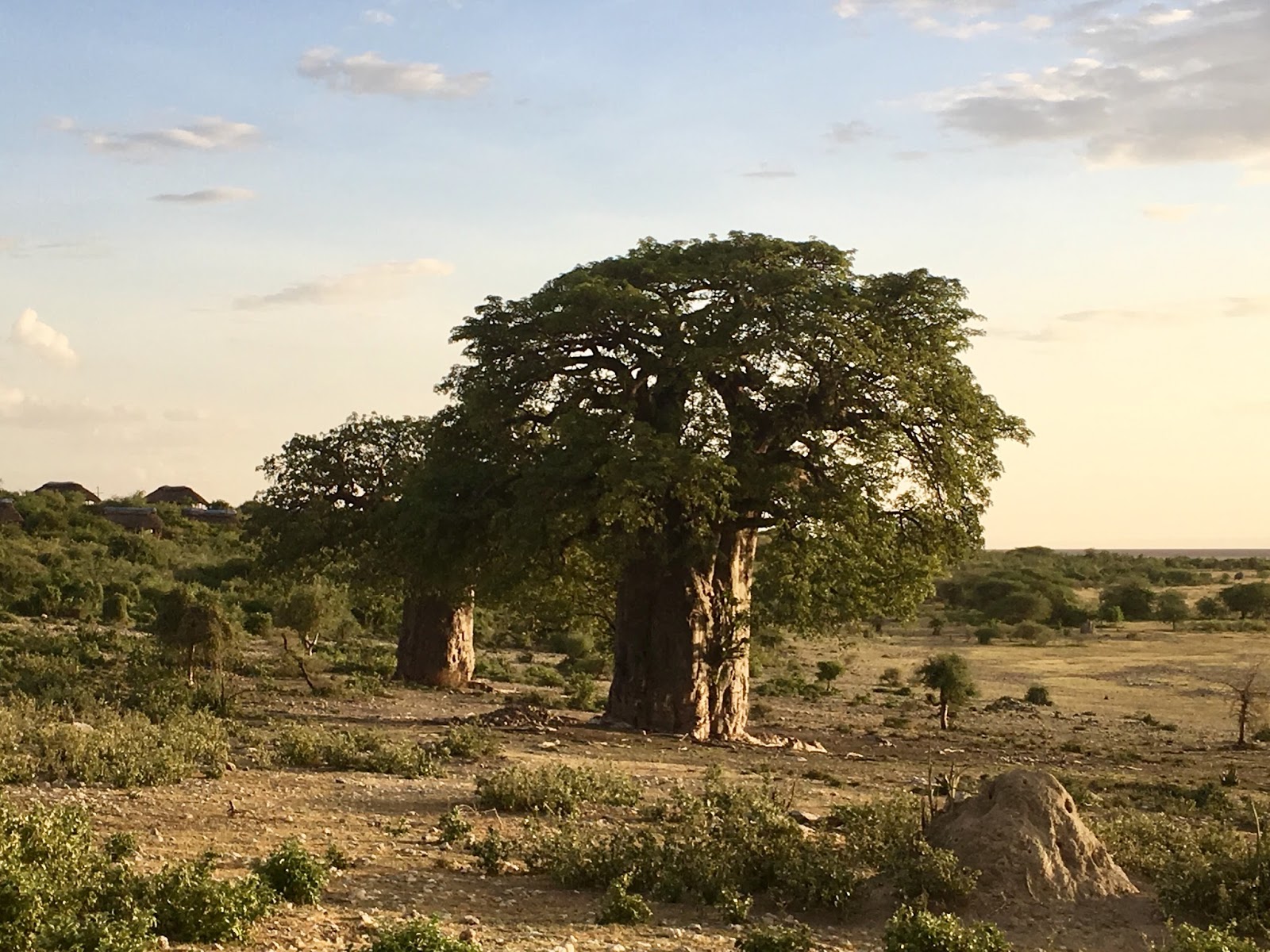
On our way to the Lodge we passed some enormous baobab trees (are any baobab trees not enormous?) which is one of my favorite types of trees in the world. These things can grow to be centuries old and are so large around that they've been used in the past as house or jails. Turns out that there was another we'd see that night right in the middle of the main deck outside the Lodge's dining hall. It was just an amazing setting for a camp and the first time I ever laid hands on one of these old trees.

One night and we were gone the next morning, on the road to the Serengeti.

Always good to find a baobab tree or two on your way from one place to the next.
Last giraffe picture. They are all paying attention to something that the one on the right is doing.

Thursday, April 5, 2018

Safari Tips


So you've finally booked your first safari trip! Congratulations! It's going to be amazing no matter how long you are traveling for and which countries you are going to. You are likely to see landscapes the likes of which you've never seen before, encounter cultures you've only maybe read about (or not) and see wildlife in a variety and quantity unmatched anywhere else on the planet. Africa is a special place. It is the cradle of humankind. I hope you find the kind of peace and spirituality we've found on each of our two trips so far. I feel we have maybe three or four or more in us. So many places to go!

We took our first safari trip to the Victoria Falls area of northern Zimbabwe and Botswana in August of 2015. We then followed that up with a two week jaunt through Kenya and Tanzania this past February. We thought we were pretty good travelers in 2015. We did some things right and we made some mistakes. We tried to adjust our approach a little this year and I think we got it mostly right, although we still struggled with a couple of things. As a veteran (go ahead and laugh, please) of two safari trips, I thought I'd offer what we've learned from our time getting to, staying in, moving around and coming back from Africa. Here's a six pack (because the best things in life come in six packs) of thoughts to help you on your first safari.

On the left, my backpack during the trip; on the right, on the way home.
1. Travel Light
The first time we went on safari, we carried a single backpack each. We were only there for six nights so it seemed to us that we'd be better off if we could carry everything we needed on our backs, particularly since we'd be moving around between three separate locations. It worked really well but if there's one thing I learned on that trip, it's that people all over the world know how to wash clothes and that most safari lodges will do laundry for you. Sometimes it's even free. Any two night stay in one place is an opportunity to launder what you take with you.

This trip was longer than our first. 13 nights in total. We again elected to take a single backpack each even though our stay was more than twice as long. This time, we strategically planned to do laundry once and contacted the property located mid-way through our trip in advance to see if they offered laundry services, which they did. We could have done even better and taken less if we'd planned better and had our clothes washed more often. Lesson learned. Again.

The one problem with traveling light is it doesn't let you bring back much with you. So we always take a drawstring backpack that packs flat to accommodate souvenirs. You can still count your main backpack as a carry-on and use the drawstring backpack (now full with stuff from curio shops) as your personal item to place under the seat in front of you on the way home.

2. Carry Tip Money
I suppose tipping isn't mandatory when you are on safari, but it might be the right thing to do. If you can afford to travel all the way to Africa for a week or more, you can probably afford a little gratuity for the folks who are guiding you, driving you, carrying your bags or walking you to your tent at night in an unfenced camp to protect you from potential predators like lions and hyenas (hey, it happens).

The problem with tipping is it requires a lot of small bills and it's not always easy to get denominations of money equal to a buck or two out of an ATM when visiting a local bank. In Kenya, the smallest note we got out of an ATM was 1,000 shillings which is worth about $10. In Tanzania, we did a little better, getting all our cash in 50,000 shilling notes which unbelievably is worth about $4.50. There are certainly occasions where we can tip larger than $10 at a time (guides and drivers particularly) but $10 is sometimes a bit much, particularly when there are a lot of folks to tip for relatively minor efforts. $4.50 is a much more comfortable tip but even that might be a bit rich for some people sometimes.

The solution: carry your local currency. Everywhere we went this year people were happy to accept U.S. dollars or Euros or British pounds. There are currency exchange shops all over the place and some may even do it without fees for locals. You can take whatever time you need to get lots of small bills before leaving home and you won't have to worry about ever having the right sized bills.

Would you rather have this?
Or this? Serengeti National Park, Tanzania.
3. Invest in a Camera
I chose the first word of this item carefully: Invest.

On our first trip to Africa I came equipped with an old iTouch and a Blackberry Torch phone to take pictures with. It worked great. As long as the subjects were pretty close. Or maybe very close. Fortunately, we got near to enough wildlife that I got a few dozen good pictures. But anything small more than a few feet away or anything large more than a hundred or so feet away? Not so much. Don't misunderstand me. I have memories from that trip that will last the rest of my life and I don't need pictures to remind me. But there sure are some things I'd like to remember better or maybe even hang on my wall at home. And for that I needed more than the cameras I brought with me to Botswana and Zimbabwe in 2015.

Last summer we made the decision to buy a better camera. And by that I mean better than our phones. The problem is we don't know much about apertures and f-stops and all that sort of stuff and don't particularly want to learn. We also didn't want to mess around with multiple lenses while being out on safari or anywhere else for that matter. We're traveling light, remember? The last thing I want to do is add a bunch of zoom lenses to my luggage.

Enter the Nikon COOLPIX P900. It's a fixed lens camera with an 83x zoom feature that's super easy to use for camera dummies like us while also having the ability for more sophisticated users to dictate custom settings if they are so inclined. It allowed us to photograph wildlife in stunning detail from a long long way away while also being able to handle very large and very close animals. Most all of the pictures on this series of blogs I'm writing about this trip were taken with this camera. As a point of comparison, the two pictures above were taken with my iPhone SE and our Nikon. The top photograph is zoomed all the way in on a tree with a leopard on the lowest branch to the right of the main trunk; it's a little splotchy because it's really beyond the range of my phone camera. The photo below that was taken using our new camera. There's absolutely no comparison between these two pics.

We traveled with some folks this year with more expensive and more complicated cameras. My opinion is the camera we bought was better. I can't recommend this camera enough. I love it. I feel a little awkward promoting stuff on this blog but it's amazing. It really is.

4. Bring Batteries and Memory
After getting our awesome camera (and testing it out last August in Alaska), we decided we needed some backup power and some storage before we hit Kenya and Tanzania, so we headed to Best Buy or wherever it was that we went to get some spare batteries and some extra memory cards. After all, we were planning on being in the middle of nowhere for two weeks. Surely having some extra juice and some memory cards on hand in case we filled up the camera during a lion hunt or something like that would be a good call.

Do you know how much memory cards for cameras cost? I figured they were cheap and picked up a 256GB memory card, only to return it when it rang up at about $200 at the register. No thanks! We settled for an extra 64GB and two extra batteries. We needed the batteries because power really was in short supply in some spots. We also needed the memory because we filled a 64GB card in about a day and a half. My cheap-ness almost un-did us with just 64 more GB to spare. After that we decided to just download our pictures once or twice a day onto our iPad Minis and then cull the collection on there where we could get a good look at them on a larger screen. Way better, easier and cheaper. Unless you don't have an iPad I guess.

No matter how you decide to do it, don't head overseas on safari without some kind of backup plan. Our amazingly awesome camera has its own wifi that allows us to download pictures in minutes to our iPads and then clear the internal memory. We found it really easy to use what we usually watch movies on as an external hard drive. It's not like this is the only camera in the world with this feature but if your only option is to spend $200 or more on memory, do it. Better that than running out of storage at a critical time.


5. Pack a Wildlife Guide
I know my first tip above was travel light so why am I now encouraging you to pack extra stuff? Well, on both our safari trips having a wildlife guide handy for our own use has proven pretty useful.

First, I'm not talking about a large book with pictures of every species of mammal, reptile, bird and anything else you might come across in it. I mean a laminated foldable card that shows maybe the top 50 or 60 species that takes about no space to pack. After all, it's as flat as about three or four sheets of card with some lamination.

Why do we even care about this? I mean won't your guide have something way more deluxe plus years of experience spotting wildlife? Why bother?

Two reasons. First, it helps to be a little self-sufficient sometimes. Rather than constantly asking "what's that?" you can actually identify a secretary bird or a gerenuk yourself instead of relying on someone else. It also allows you to make requests. Will we see all three species of hyena or just the same spotted one we keep bumping into everywhere? Odds are on this one you'll just see the spotted one and that's it.

Second, it's a way to make friends. Lending your guide to others allows interaction among you and your fellow travelers if you need a prop to stimulate conversation. Guaranteed not many others in your party have these things. You're a mini-rock star if you bring one of them along in your one bag. They are cheap and you can get them at Amazon, like everything else on Earth.


6. Bring a Hat (With a Cord)
The sun is hot in Africa. It's not likely to be the same as where you are from because you probably don't live as close to the equator as you will be when you are on safari. A wide-brimmed safari hat in olive green or khaki (do they make other colors?) is an essential must-pack. I know it's a bit cliche and they are not the most attractive things in the world but believe me once you see the aftereffects on someone else a couple of days in, you'll be glad you have yours. And guys, I know you think you have plenty up top there but some of us may have less than we like to admit. Wear a hat! I got one that packs flat which is great for traveling since I can just shove it in the back pocket of my one bag that I allow myself to bring.

Now here's the important part: make sure it has one of those strings that goes around your neck and cinches tight. Safari vehicles go fast sometimes and the hat can blow off your head, particularly if you have an open-topped or pop-top car like we did. We had four hats blow off in our two weeks (three by one person...) so it's not like what I'm cautioning against is a rare occurrence. Don't worry, we went back and picked them all up. I mean we can't really leave them in the middle of a National Park for a lion to choke on. But still, you don't want to be that person ever, right?

Heading off to Africa next week or next month or next year? Consider this post a "bare minimum" checklist to point you in the right direction for success. If we ever go back, we'll certainly use all this knowledge from our mistakes on our past two trips. Well, make that when we go back, not if. This place calls to us on a different level than anywhere else we've ever been.

LOVE this camera! Serengeti National Park, Tanzania.

Sunday, April 1, 2018

Amboseli


Mount Kilimanjaro, located near the northern border of Tanzania just south of Kenya, is the tallest mountain on the continent of Africa. It is also one of the tallest single mountains (meaning it doesn't sit within a range) in the world. Our Kenyan guide, Joe, described the mountain as shared between the two countries: Tanzania owns the mountain, but Kenya owns the view. If there was a place we might see Kilimanjaro, it would be when we were at Amboseli National Park in Kenya. With as much of a fill of rhinos as we could probably reasonably expect to get in just one day at Lake Nakuru, we headed south and east to Amboseli and Kilimanjaro. Although Joe wasn't promising us anything.

The road to Amboseli would be the last really long ride of our two week trip. Once we crossed into Tanzania the rides in cars got shorter and easier. But Amboseli made us feel like it had better be worth it. If we thought the road to Masai Mara was long at six and a half hours or the road to Nakuru was brutal at nine hours, the journey to Amboseli topped both of them. It was another nine hour drive, but that was timed after we left the park. My clock to Nakuru started when we left the lodge in Masai Mara and included several stops for some excellent wildlife watching. The road to Amboseli was nine straight hours of highway with just one short stop. And certainly no wildlife.

Our route that day was the main road that runs all the way to the port of Mombasa where Kenya's coast meets the Indian Ocean. Before the road enters Kenya at the border crossing at Malaba, it serves Uganda, Rwanda and South Sudan and trucks (or lorries, if you prefer) from those landlocked countries slowly make their way to and from the coast loaded with shipping containers filled with exports from the interior and imports from the sea. And I do mean slowly. The road is one lane each way and it's hilly in many parts. It is slow going most of the way and there is a lot of passing when possible in the other lane. This leads to endless games of generally good-natured and congenial chicken for most of the nine hour ride. If we saw the mountain and some other good stuff at Amboseli it would probably be worth it. Either way, we were doing it anyway.

Following a string of trucks down the road to Amboseli; unable to pass.
Size-wise, Amboseli fell in the middle of the three Kenyan parks on our agenda at 151 square miles, a little more than double the size of Nakuru and still way smaller than Masai Mara. If we were thrilled with the different types of landscapes we'd seen at the two previous parks, Amboseli provided us with the most diverse environment we'd seen to date. 

The word Amboseli is adapted from a Masai word meaning "open plain" but it didn't seem anything of the sort to us. We drove through parts of the Park that resembled the bush we'd driven through in Botswana in 2015, and on our way out two days after our arrival, we crossed the most barren stretch of desert we'd pass over on this trip; although if it had been a couple of months later, it would have been a lake. And then there are the swamps. Yep, in one of the driest parts of the Earth, there are a series of swamps in southern Kenya.

Amboseli's swamps are products of Mount Kilimanjaro. It (or maybe more accurately the snow melt runoff from its peak) is literally the lifegiver of the marshes that we drove around and between in our day and a half of safari drives inside the Park. Water is often in such short supply in many of the spots we visited in February. It should come as no surprise that these water filled areas in Amboseli are heavily visited by wildlife every day.

In my first post about this trip, I described how we were fortunate to find something different and unique at each of the six parks we visited. At Amboseli, we found elephants. Lots of elephants. Amboseli has a larger elephant population than any other park we visited and it shows. We found them in the bush as lone males. We found them in families making their way from the mountain to the grass they love to eat in the Park. And we found them in the swamps in large groups with elephants all around them and even more in the distance. Amboseli even has the elephants that used to live in the Nairobi National Park; they were relocated when the park was fenced to an area smaller than the elephants needed. It's packed full of elephants.


Elephants were the number one reason we wanted to come back to Africa so it should come as no surprise that we were especially looking forward to Amboseli. Watching these animals interact in complex social structures is something I think I can do all day. They are just way more exciting than checking out a herd of impala or seeing a giraffe or two wondering around. Now, that's not to say Amboseli was the only place we saw elephants because it certainly wasn't. In fact, we saw elephants at every single park we visited. They were one of the only few types of animals that we could say this about. It's also not to say that we were disappointed in the lions and leopards and rhinos and all the other wildlife we saw seemingly everywhere we went. But the quality and quantity of elephant sightings at Amboseli outstripped every other place we went.

So how was it? Well, it was pretty amazing. We spent the good majority of one day in the Park, getting up fairly early for a morning drive and then taking an afternoon sojourn after lunch at our safari lodge just outside the gate. We saw a lot in those two drives and we did it in a counterintuitive way from the way we'd done these trips everywhere else. 

Let me explain.

Elephants need variety in their diet. They get leaves from the trees at the base of Mount Kilimanjaro and they get grass (along with plenty of water to wash it down) in the swamps of the Park. Most game drives we have taken in Africa operate on the assumption of "the earlier the better." In other words, get to the spots where the animals are before the mid-day sun comes out and drives them all into the shade. 

Not required at Amboseli, and particularly with the elephants. Because of the complete lack of grass at the mountain and the complete lack of leaves in the Park, the elephants of Amboseli are essentially commuters. That means they make the long trek from the mountain to the swamps and then do the reverse commute in the afternoon when they've had their fill of grass. Don't get up too early to see them because they won't be there. Also remember this is a Park not a reserve; there's only one trail to get to the good stuff and there's no backing up. Timing was key and later, in this case, was better.


Elephants are best seen in families, not alone or in twos, although we certainly saw our fair share of bulls by themselves and in bachelor pairs. They travel together, they feed together and they protect one another in groups. This is particularly true of the babies, who are never far from their mother or one of the other females in the herd. Elephant calves are much like human infants. They need to be taken care of and taught what to do with everything, particularly with their trunks. Come across a group of elephants with a baby and you are likely to see mother and baby right next to one another and there's always likely to be at least one member of the herd keeping an eye out for any sort of aggression.

I think my favorite look at the elephants we got at Amboseli was the procession of nine or ten elephants making their morning commute. We saw them from the main trail walking in an absolute straight line from the main road and then were able to cut them off and see them walking towards us and then away towards the swamp once they crossed behind us on the secondary road we turned on to. The "coming" picture is above; the "going" picture is below. In these single files the matriarch of the herd, the single wisest and most experienced female, leads the herd and the smallest of the bunch, the babies, are always in the middle. The herd we saw was trailed by the dominant bull, who was sufficiently far behind the column to not be visible in the photos on this post. He made sure we knew he was there when we first saw them from the main road and we made sure we kept our distance when we stopped for a better look later on. Don't get too close to elephants, folks. You don't want one of these animals coming at you upset.

That logic applies not just to families with babies. On our way out of the Park after our second trip to the swamps we came across a pair of males crossing the road in front of us. After the first one crossed, he turned around, looked at us and marched back onto the road. We backed up. It's the only time I've been in a safari truck where we've backed up. Our driver, Peter, was justifiably taking no chances and we must have been just a bit too close for comfort. Don't want to be there.


In between the commuters we saw in the early-ish morning and the last males who we thought better of being too close to, we spent a good amount of time watching elephants drink, eat and teach their babies what to do to be an elephant. And of course in addition to seeing the elephants in the marshes, we got a good look at elephants (and all sorts of other animals) in front of the great old mountain, Kilimanjaro, who we had come so far to see.

It really is pretty impressive. There's nothing even approaching its size anywhere on the horizon. It is the singular feature that stands out in an otherwise open plain (guess the Masai got this one right in the big picture). When we got to our lodge after the ride from Nakuru, the mountain was already shrouded in mist and when we got up the next morning (the front doors of all the tents at our camp point towards Kilimanjaro) the top was covered in clouds. But by the time we left for our first game drive, the snow-capped top was clearly visible and it stayed that way for most of the day. We already missed one mountain in the past 12 months in Alaska so I'm glad we saw this one pretty clearly. It provided a great backdrop for wildlife watching.

But elephants and the mountain weren't the only excitement we'd get at Amboseli. I mentioned in my first post of this trip that one of the things we hoped to see was a hunt which would result in a kill. While we had seen a pride of lions gathered around the last remnants of a carcass at Masai Mara, we were still looking to see some predator on prey action by the time we reached the foothills of Kilimanjaro. Then the road we were traveling to follow our last elephants of the day led us to a pride of lions.


While we had seen plenty of cats (including lions) at Masai Mara, they were mostly all sleeping or lying down in the shade, probably because it was the middle of the day and lions and other cats tend to do that while the sun is highest in the sky. I was especially interested in seeing lions do something more than sit or lie because, to me, they look so much bigger and powerful when they move around. With their bellies on the ground, lions look like they are somewhat harmless. On four feet? Not so much. These animals are powerful and to be feared.

The pride that we found that afternoon were six strong and we got them when they were just waking from some sort of nap or long sleep. We first laid eyes on one or two near a stand of pretty good sized palm bushes. Eventually two more emerged and they started on the move, looking like this might be a hunt because it resembled what we had seen in our last day in Botswana in 2015 and that was for sure a hunt. Once the first four lions looked back towards the bush and two more lions walked out towards the first four waiting in place, we were positive these lions were looking for some meat.

The objects of the lions' gaze? A herd of wildebeest on the other side of the road we were inching along tracking the pride. It didn't seem like the prey had any idea they were being tracked.


Lions tend to draw attention from tourists. It's not like elephants don't but there are a lot more elephants than there are lions. Elephants at Amboseli stretch about as far as the eye can see in groups of one through five or seven or ten or more. These lions that were eyeing the wildebeest were the only six we saw in the Park. By the time they had gotten around to looking like they were making a serious move on possible dinner, a few more trucks with tourists had shown up. How many trucks are in the picture above? 12? 15? 18? And there were a few more around our vehicle that don't show up in that shot. And this is the shoulder season. I can't imagine what Kenya and Tanzania are like in the summer. It sounded like from our guides that there are self-imposed and peer-enforced time limits. Like five minutes before moving on. I'm glad we came in February and could spend whatever time we liked with whatever we saw.

The line of cars, while notable for its length, also blocked the wildebeests' view of what was about to hunt them. The lions slipped through the vehicular mass and popped out on the other side almost undetected.

The success rate for a lion or group of lions hunting during the day is less than 20%. That means that of every five hunts, at least four are unsuccessful. I'm convinced the one we missed in 2015 was going to result in a kill. There were so many impala and the lions we were watching had them flanked on both sides. It was pretty obvious that this one in Amboseli was going to be over as soon as it started. Yes, the lions got over the road undetected but it didn't take long for the herd to start purposefully trotting away before breaking into a more vigorous light sprint. The only moment of tension was caused when one of the herd broke and ran in the exact opposite direction from his (or her) friends. I cannot fathom why a herd animal would want to break from the pack. In a group, you just have to run faster than the slowest wildebeest. Alone, you have to run faster than the fastest lion. I'd stay with the herd.


Our lion sighting in Amboseli marked the third park in a row where we'd seen these animals and still no hunting and no kills. Our quest for blood would continue even as our guide, Joe, told us tales of people being very affected emotionally when they finally got a look at one in person. For this day and this abandoned hunt, we were done.

The next morning we passed through Amboseli on our way out of Kenya and into Tanzania. Three parks down, three to go and each one had a different story so far. We got cats at Masai Mara and rhinos (but no flamingos) at Lake Nakuru. Amboseli gave us our best look at elephants. 

There are a few last points I'd like to make about this place before moving on and ending this post.

First, and this is in no way critical of or complaining about the wildlife sightings we saw there, Amboseli made me appreciate our time two and a half years ago in Botswana more than ever. We saw and watched elephants far more effectively and intimately from the Chobe River in a small boat than we ever have in a vehicle with wheels. Amboseli was gorgeous and unforgettable and it got us looks at so many different species of animals in an amazing way. But it didn't get us what we got in Botswana.

Second, I promised in my first post about this trip that I would share some of my favorite photographs even if they didn't fit in with whatever narrative the particular park gave us in any one post. Right after we saw the parade of elephants on our morning game drive, we saw a zebra rolling in the dust of the bush. I missed him (or her, I guess) rolling around but got the dust shake off in action. That picture is below. I love it because the zebra appears to be standing dead still and just shaking the dust off its head and neck, which I suppose really is exactly what is happening.


Finally, and sadly, climate change is affecting Amboseli just like it has already affected Lake Nakuru National Park, where we stayed right before Amboseli. Kilimanjaro is not getting as much snow as it used to due to the temperature of the Earth rising. That's causing less snow melt which feeds the swamps where the animals in and around the area get water. Whether you believe our planet is getting warmer due to man-made causes or natural causes, there's no doubt that it is, in fact, getting warmer. And that's going to affect areas like Amboseli. When it happens and it causes the death of these swamps, it's not like the animals can wander off somewhere else. Man has pretty much taken over everywhere else. Something bad will happen.

The solution, or some ideas for some solutions, are apparently in progress already. The flamingos already mostly left Nakuru. The elephants can't just as easily leave Amboseli.

We, however, did, taking off across the desert that would in a few weeks become flooded by Lake Amboseli. I'll end this post with a couple of giraffe running across that baked dirt. Just a couple of miles away from the swamps of Amboseli, things are very, very different. Imagine how much poorer we'd be if the whole place looked like the picture below.